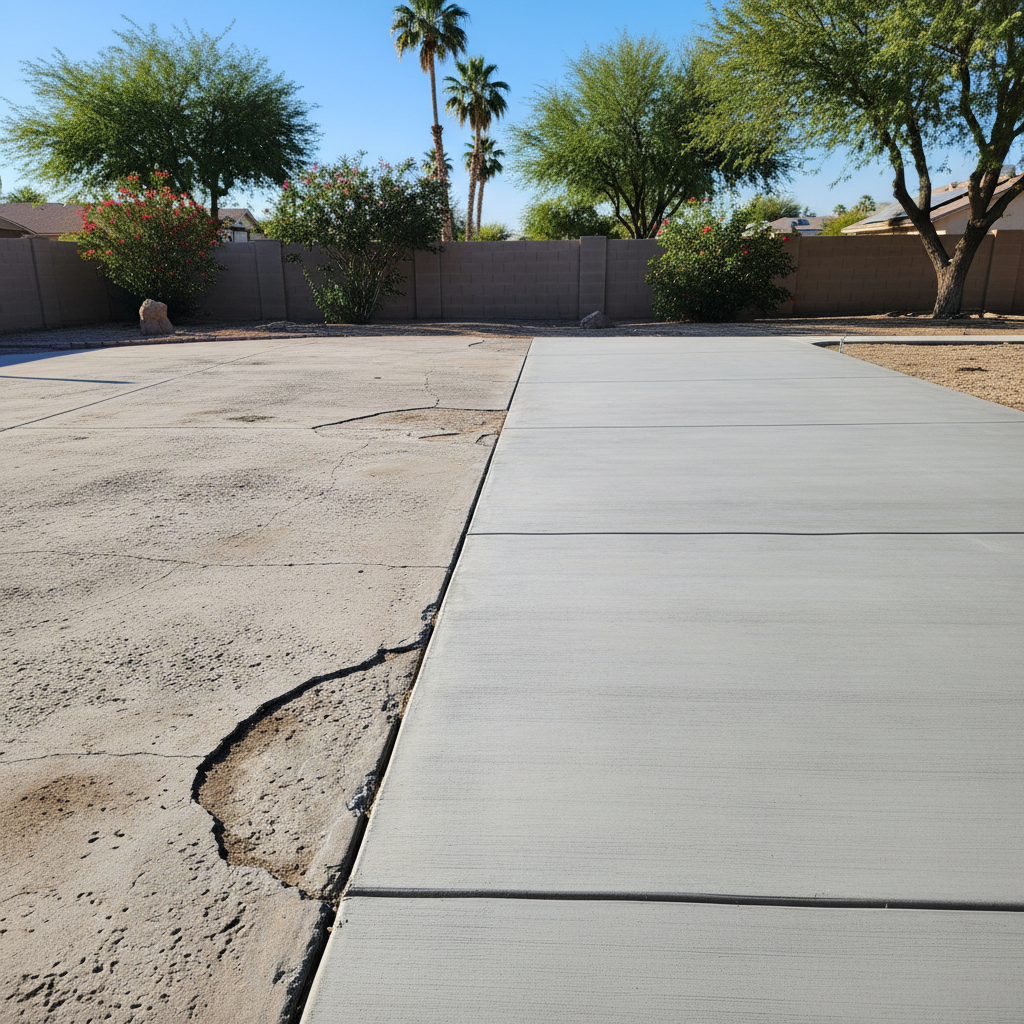
Alright, let's talk about something every homeowner in Bullhead City eventually faces: what to put down for your patio, walkway, or even your driveway. You've got two main players when it comes to flatwork: good old poured concrete or those individual interlocking pavers. Both have their fans, and both can look great. But living here in the desert, you gotta think about more than just pretty pictures, right?
I've been pouring and laying concrete around here for years with Top Notch Concrete Solutions. We've worked from the residential streets near Rotary Park to the businesses off Highway 95. I've seen firsthand what holds up and what doesn't when that Bullhead City sun beats down, and when the ground shifts a bit. So, let's get real about which option makes the most sense for your place.
Cost: What You Pay Now vs. What You Pay Later
When you're first looking at prices, poured concrete usually seems like the cheaper option, especially for a basic slab. You're typically looking at somewhere around $5 to $15 per square foot for plain concrete. If you want to get fancy with stamped concrete, that can jump to $9 to $30 a square foot.
Pavers, on the other hand, usually start a bit higher. Installation often runs in the $10 to $50 per square foot range. That's because laying individual pavers takes more work than pouring a big slab. So, if you're just looking at the initial sticker price, concrete often wins.
But here's the kicker: that upfront cost doesn't tell the whole story. You've got to think about the long haul, especially with our climate.
Durability: Desert Heat and Shifting Ground
This is where things get interesting for us in Arizona. Our ground expands and contracts a lot with the extreme heat and those monsoon rains.
Poured concrete is strong, no doubt. But it's one big, rigid slab. When the ground underneath moves, or when it heats and cools rapidly, that concrete slab can crack. Once it cracks, it's tough to make it look good again without patching or replacing a whole section.
Pavers are different. They're individual units, laid over a prepared base. This means they can flex and shift with the ground without cracking like a solid slab. They're designed to handle heavy loads and temperature changes better because they aren't one continuous piece. If one paver gets damaged, you can just lift it out and replace it. Easy peasy.
Maintenance: Keeping It Looking Good
Nobody wants to spend all their free time fixing their outdoor spaces, right?
Poured concrete is pretty low maintenance initially. You'll want to clean it regularly and reseal it every few years to protect it from stains and the sun. But if it cracks or stains deeply, repairs can be noticeable and hard to match. And if you've got unsealed concrete, oil stains can really sink in with our heat.
Pavers require a bit more attention to keep those joints filled with sand, which helps them interlock and stay stable. You might get some weeds popping up between them, too, so occasional weeding or re-sanding is part of the deal. However, the big win for pavers here is how easy they are to repair. If a paver gets stained or damaged, you can pull just that one out and pop a new one in. You don't have to tear up a whole section. This can make the lifetime maintenance cost of pavers comparable to, or even lower than, concrete in our climate.
Appearance: Style That Lasts
You want your home to look good, and your flatwork plays a big part in that.
Poured concrete can be customized with colors and stamped patterns to mimic other materials like stone or brick. But those colors and patterns can fade over time in the intense Arizona sun. A plain concrete slab can sometimes look a bit utilitarian.
Pavers, though, offer a huge range of colors, shapes, and patterns. You can create some really intricate and custom designs that boost your curb appeal. They tend to hold their color better and give a more high-end, polished look that can increase your property value.
My Take for Bullhead City Homeowners
So, what's my recommendation for folks here in Bullhead City? While poured concrete might save you a few bucks upfront, I generally lean towards pavers for most outdoor flatwork projects in our desert environment.
Here's why: Our soil, especially the expansive soils we have around here, moves. That constant shifting, combined with our wild temperature swings, makes concrete slabs prone to cracking. Pavers are just built better to handle that. Their interlocking design means they can move with the ground instead of fighting it.
And let's be honest, repairs are a fact of life. Being able to easily replace a single paver instead of patching or tearing out a big chunk of concrete? That's a huge advantage in my book. It means your outdoor space stays looking great for longer, without those ugly, mismatched patches.
Yes, pavers usually cost more to install initially. But when you factor in their longer lifespan, easier repairs, and how well they stand up to our unique Arizona conditions, they often end up being the more cost-effective and visually appealing choice in the long run.
If you're thinking about a new patio, walkway, or driveway, give us a call at Top Notch Concrete Solutions. We can talk through your specific needs and help you figure out the best approach for your home.